


TVET in Lebanon Today: Learning Through War, Holding on to Hope
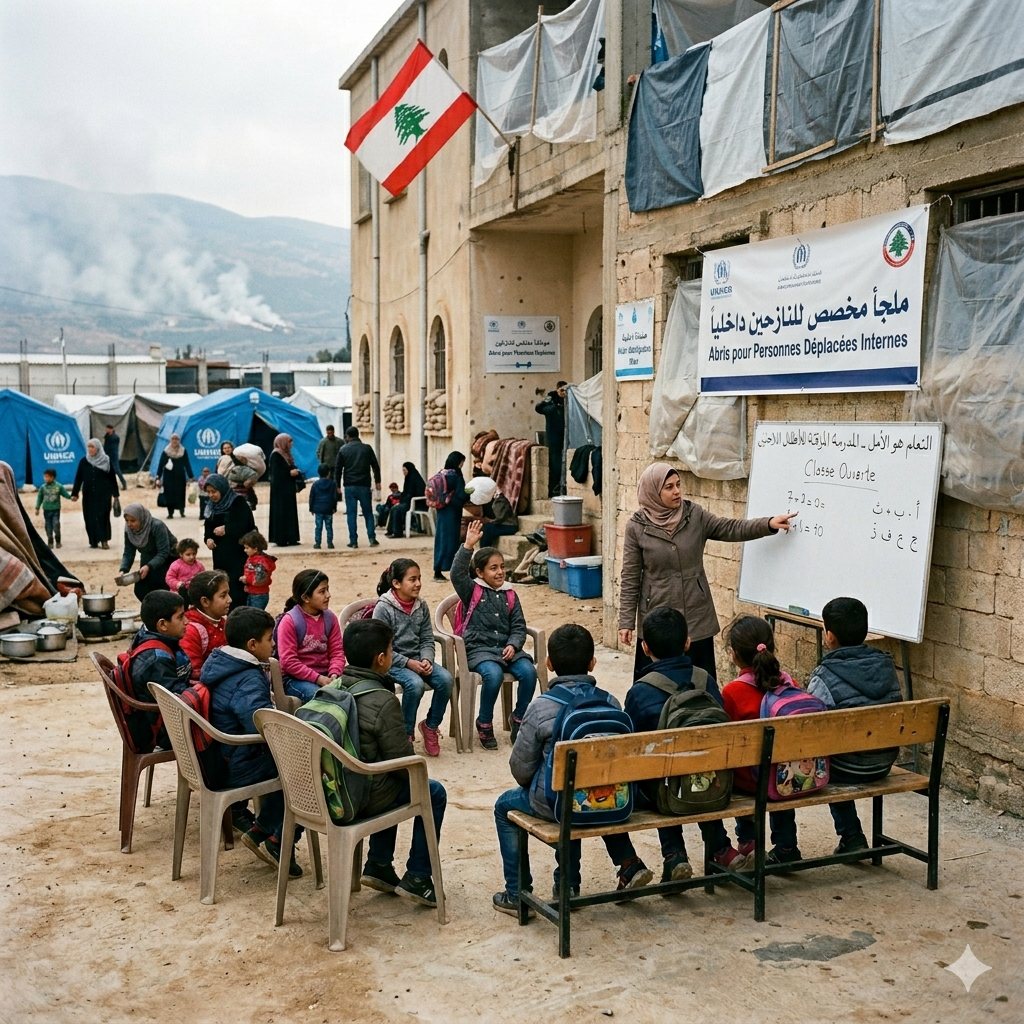
TVET in Lebanon Today: Learning Through War, Holding on to Hope
Since early March 2026, Lebanon has once again been drawn into a devastating war. What began as an escalation linked to a wider regional conflict, has quickly turned into one of the most severe crises the country has faced in recent years.
Airstrikes, rocket fire, and ground operations have spread across multiple regions, including southern Lebanon, the Bekaa, and even parts of Beirut. Entire neighborhoods have been damaged or destroyed. Civilians have fled their homes in waves, often with little notice and nowhere certain to go.
Today, nearly 20% of the population have been displaced, and hundreds of thousands are now living in schools, shelters, or temporary spaces.
Many schools and training centers have been converted into shelters. Others have shut down entirely due to safety risks. The result is not only a humanitarian crisis, but also an educational one.
It is within this reality that Lebanon’s Technical and Vocational Education and Training (TVET) sector is trying to survive.
A System Under Pressure
Lebanon’s TVET system includes around 566 institutions nationwide, serving tens of thousands of youth seeking practical skills and employment pathways. The system is no longer unified. It is fragmented and reshaped by war into three parallel realities.
Three Realities, One Sector
1. Closed Doors: When Learning Stops
In areas most affected by the conflict, TVET institutions have been forced to shut down completely. Some buildings have been damaged. Others are now shelters for displaced families. Entire communities have been uprooted. For students, this often means sudden interruption, with no clear return, and the risks are real:
- Increased dropout rates
- Loss of hands-on training, essential in TVET
- Higher exposure to child labor or economic vulnerability
Even before this escalation, many young people in Lebanon were already struggling to stay in education. Today, that struggle is even harder.
2. Screens Instead of Workshops: Learning Goes Online
In relatively safer but still unstable areas, some institutions have shifted to online or hybrid learning. It is a sign of determination, but also a daily challenge. Students now try to learn technical skills through screens, often:
- With limited electricity and unstable internet
- Sharing one device among several family members
- Without access to tools, labs, or real practice environments
For TVET, this is especially difficult. You cannot fully learn a profession like mechanics, nursing, or carpentry without using your hands. And yet, there are efforts that stand out:
- Trainers recording step-by-step practical demonstrations
- Institutions organizing short in-person sessions when security allows
- Continuous mentorship and follow-up to prevent dropout
In a context where simply staying connected is a challenge, continuing to learn becomes an achievement.
3. Continuing Against the Odds: Learning in Safer Areas
In some parts of Lebanon that remain relatively secure, TVET institutions are still operating in person. Workshops are open. Students attend. Training continues. But even here, stability is fragile. Students sometimes:
- Travel from conflict-affected areas
- Face sudden disruptions due to security incidents
- Struggle with financial pressure and transportation challenges
Stories of Resilience
Despite everything, resilience continues to emerge in quiet but powerful ways. Young people are still logging into online sessions despite electricity cuts. Trainers are still showing up, adapting lessons, and supporting students. Institutions are still trying—sometimes with very limited resources—to keep learning alive.
In previous crises, TVET graduates in Lebanon played a role in rebuilding communities, repairing homes, restoring infrastructure, and supporting local economies. Today, the same potential exists, but depends on the duration of the current war.
Beyond Education: A Question of the Future
The disruption of TVET is not just an education issue—it is an economic one. Lebanon is already facing high unemployment, especially among youth. TVET has always been one of the most direct pathways to jobs. When training stops:
- Skills are lost
- Workforce entry is delayed
- Recovery becomes harder
In a country that will eventually need to rebuild, physically and economically, the role of skilled youth will be critical.
Holding On
Today, TVET in Lebanon exists in three realities at once:
- Institutions that are closed
- Institutions that have adapted
- Institutions that continue, despite everything
It is a system under pressure, but still standing. And at its heart are young people who continue to learn, even when everything around them suggests otherwise.
In times like these, TVET is more than education, it is a lifeline to dignity, to opportunity, and to a future that Lebanon still hopes to rebuild.